
They say what doesn't kill you makes you stronger. Slipknot's sophomore album, Iowa, almost killed the band, but fortunately for everyone, they powered through and created one of the most highly revered metal albums of the century. Everyone who worked on the record endured more than just trials and tribulations. Whether it was the band themselves, their family members, the producer, or anyone else who worked at the studio, no one was safe from the Hell that was happening in the recording booth. They scratched and clawed their way out of the depths of that Hell to create a deeply disturbing but also very profound piece of art that still stands the test of time to this day, and will continue to do so for many more years to come. Let's dive deep into Iowa (if you dare), a snapshot that captured a tumultuous period of time for one of metal's biggest bands of the 21st century.
To truly and wholly understand the complexity and mystique of the finished product, one must comprehend the circumstances surrounding the recording process. Slipknot, a tribe of misfits from Iowa struggling with demons and searching for escape through the art of music and performance, released their self-titled debut studio album on June 29th, 1999 via Roadrunner Records. They were catapulted into superstardom, in no small part to their inclusion on that years Ozzfest lineup. The record was let loose onto the world in the midst of the tour. Even though they were slated on the second stage early in the day, often around noon, Slipknot generated so much buzz that fans knew they had to get there early to see them. Their frightening look, frantic on-stage energy, and ferocious music sent the audience into a frenzy. The band took this opportunity and ran with it, and it paid off. In less than a year, Slipknot had achieved Platinum certification status by the RIAA.
Their rapid success meant that all eyes were on Slipknot to see what the band would do next. How would they follow up and improve upon the commercial giant that was their debut? Some said it would be a near impossible task for any band to achieve, and it almost was. After spending months touring in promotion of Slipknot, bassist Paul Gray and drummer Joey Jordison got to writing a majority of the material for the next record. Then the band immediately went into the studio at the beginning of 2001, leaving no time for a break. Just grind, grind, grind. One can imagine the toll that would have. Roadrunner Records wanted the next Slipknot album to be more technically sound as well as more palatable and radio-friendly, akin to their contemporaries in Limp Bizkit and Linkin Park. But Slipknot listens to no one, so of course they did the exact opposite. They enlisted Ross Robinson, the godfather of nu metal, yet again as they had for their debut album. Nothing could have prepared anyone for the gruesome future that was in store.
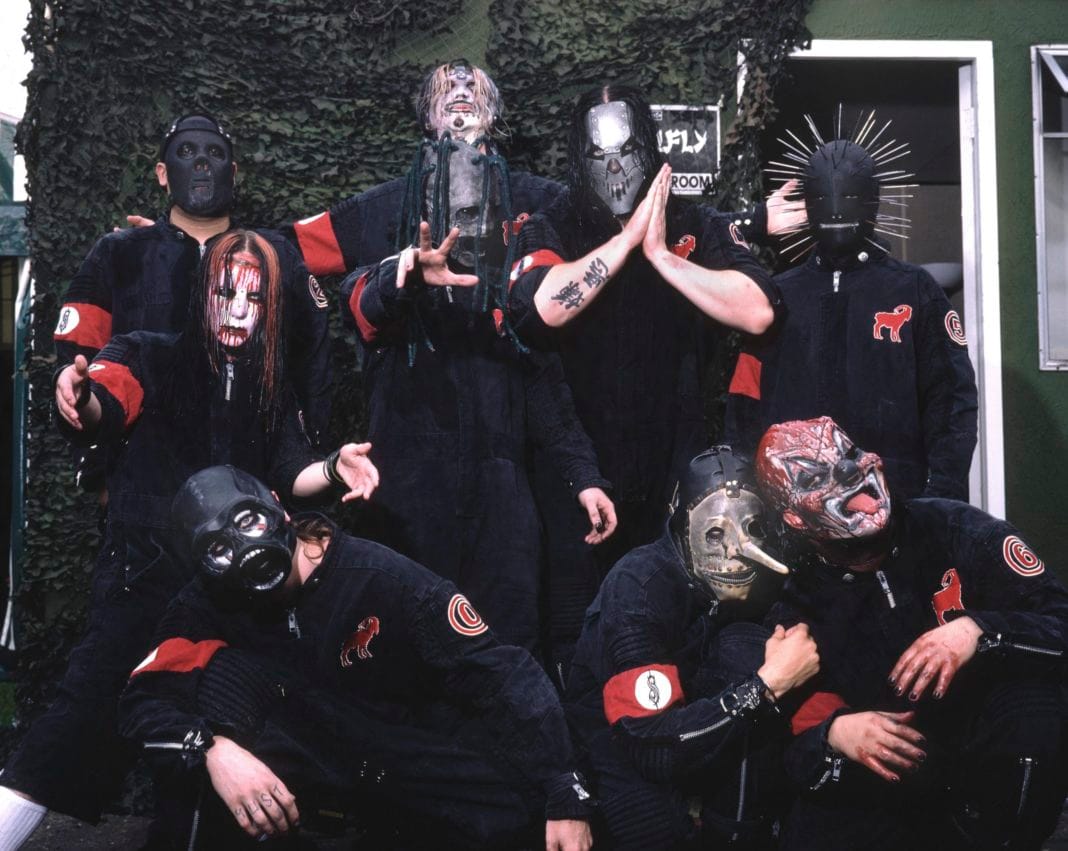
They say that diamonds are made under extreme pressure. If that's true, Iowa must be the brightest one of them all. Not only did the band not have time to catch a breath from their newfound prominence, they also didn't know how to handle the rockstar lifestyle. Whether it was alcohol addiction, drug use, or a combination of both, the stress of touring, fame, and expectation, management issues, deep rooted trauma and anger issues, even sickness and death of loved ones, tensions were sky high among the band. They hated each other, and it got so turbulent that the band almost imploded. But rather than call it quits, they channeled their anger, pain, and issues into the only avenue they knew: the art of music. They allowed their suffering to fester inside the walls of the recording booth before just letting fucking loose. Not even Robinson was immune to this. During the recording process, he had fractured his back in a dirt bike accident, and instead of staying home and recovering like any normal person would do, he was at the studio the next day, mixing his own pain with that of the band's. That's true dedication right there. Many others would have ran far away from Slipknot's deranged vision for their album, but Robinson leaned into it.
Iowa doesn't ease listeners into the lunacy. Just as the band was thrust into the spotlight, listeners are thrust straight into the darkness that plagued the band's minds and hearts. The opening track, "(515)", was named after the area code for Des Moines, IA and features turntablist Sid Wilson screaming "death" repeatedly. The song was recorded shortly after his grandfather had passed away, inducing a mental breakdown. Even though most of the record had already been written beforehand, this song shows that the band took advantage of every adversity that came their way. Slipknot's home state of Iowa served as a great source of inspiration, from the childhood trauma suffered there to being homeless and the fact that there was nothing to do there except get into trouble. Themes of death, loss, confusion, misanthropy, rage, escapism, and the depravity of human beings are laced throughout every track on Iowa. "People = Shit" calls out the selfishness, entitlement, and hypocrisy of mankind and it was also the band's way of telling people to "fuck off and leave [them] alone".
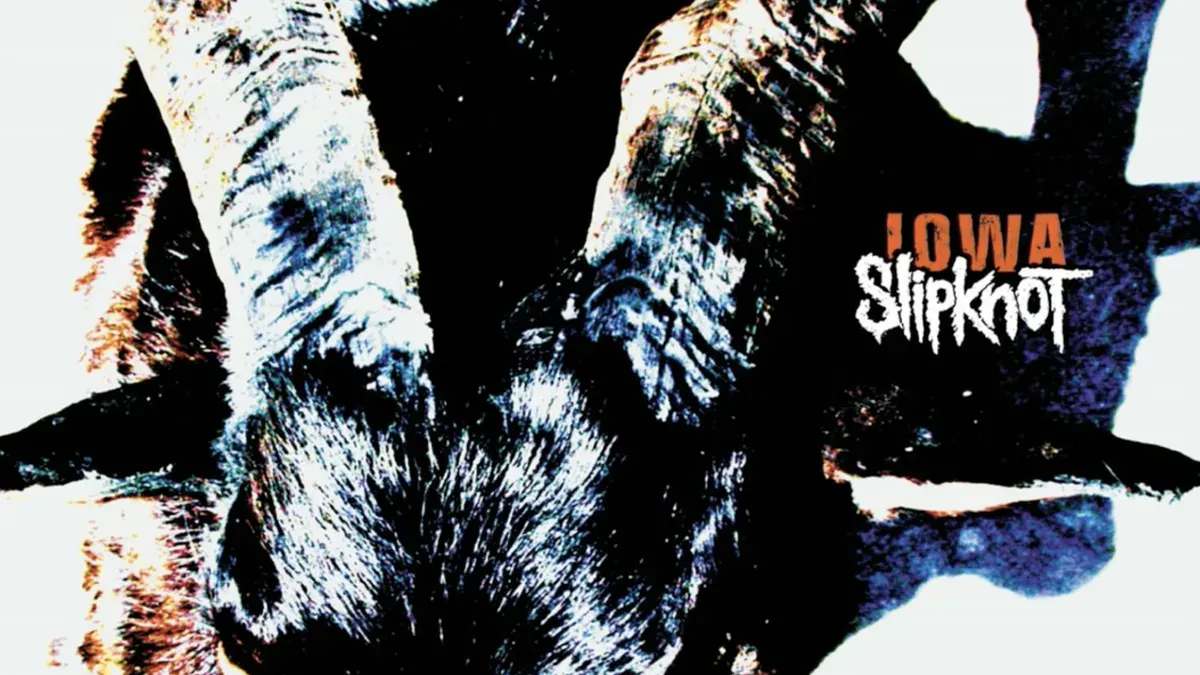
Slipknot further condemned the music industry and their critics with "The Heretic Anthem", playing up the Satanic image that detractors had falsely accused them of with their first album. With the roaring chant of "If you're 555, then I'm 666", combined with the goat head (named Eeyore) on the album cover and pentagram iconography, they rebelled against the expectations of their record label and refused to change in the name of societal pressure.
One has to be in a really dark place to start a song off with the lyrics "I wanna slit your throat and fuck the wound / Wanna push my face in and feel the swoon" such is the case with "Disasterpiece", a fucked up revenge fantasy written about bullies in Corey Taylor's childhood. Iowa mixes intellectual and deeply introspective thoughts with images of savagery and barbarity to create a unique juxtaposition, a metaphor for humanity itself. Anyone can be smart, high brow, and posh, but that animalistic primal behavior is still rooted at the heart of humanity, no matter how much people try to push it down. Some just choose to embrace it instead.
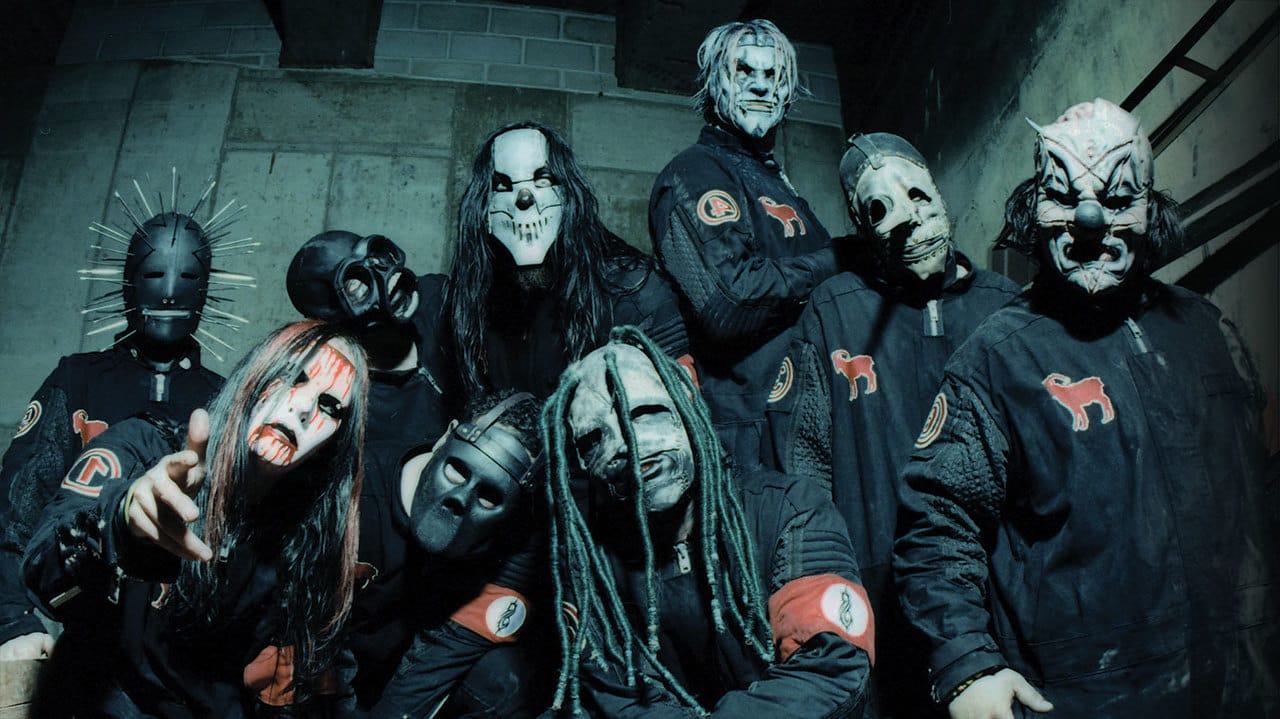
Not only is Iowa Slipknot's darkest effort in terms of lyrical content, it is also their heaviest and most brutal in terms of sound. Right from the start, it's an all out audio assault. "People = Shit" and "Disasterpiece" explode your eardrums with Taylor's guttural growls, Jordison's blast beats, Gray's booming bass, and the nasty twin guitars of Mick Thompson and Jim Root. It's hard to pin just one label onto this album. These songs learn more towards death metal (with Cognitive delivering a more classic death metal approach to "People = Shit"), while other tracks such as "I Am Hated" and "Everything Ends" fit more into the nu metal genre. However, this album, or the band in general for that matter, never truly fit nicely into the classic nu metal mold. Their popularity may have soared during the genre's heyday, and their first two albums definitely have nu elements with the turntables, hip hop beats, and quick lyrical delivery, but Slipknot sounded vastly different than the other titans of the time such as Limp Bizkit, Linkin Park, Korn, and System of a Down. They were in a category of their own. However, not every song was a fast-paced intense onslaught.
"Gently" slows down the energy, mimicking a dreamlike state where one can escape the torment of life before gradually building back up once the realization hits that they must come back down to Earth eventually and their problems are still there. The uneasiness of a psychotic break captured in "Skin Ticket" is enough to make your skin crawl. Iowa is a downward spiral into madness, wrath, despair, and aggression, but it's hard to want to pull yourself away. The perverseness engulfs listeners and refuses to let go until the album dictates when. It was a horror movie in the form of an hour long audio recording, forcing listeners to dig deep into their mind and conjure up the macabre imagery for themselves.
Taylor shows off his best vocal performances on this album. That man put his vocal chords through absolute hell, but the end product was a raw and chaotic masterpiece. His screams and growls are the star of the show, giving a vehicle for the torment inside his body to be cathartically released. His range from low guttural growls to high-pitched demonic screams is impressive. Video footage from a recording session invokes the feeling of witnessing an exorcism. You can just feel the emotion in every scream he delivers. He went so far as to completely undress, vomit on himself, and cut himself with broken glass to achieve the most fucked up and authentic sounds for the title track, "Iowa", written about spending time with a corpse from the perspective of a serial killer. He wanted to get in that demented head space and went the route of method acting. Unfortunately he did cause damage to his vocal chords, along with the continued substance abuse, so he had to shift his vocal technique post-Iowa. While not as prevalent as his diabolical screaming, his clean vocals get their chance to shine too on "My Plague" and "Left Behind". Naturally, these two songs were chosen as the singles since they were more "radio-friendly" than the others. Even his rap-like delivery of words in "Everything Ends" and "I Am Hated" are venomously spit out, reminiscent of tracks found on their debut album.
Slipknot would embark on the 2001 iteration of Ozzfest in the lead-up to the release date. The diabolical finished product was unleashed on the world on August 28th, 2001. Iowa was an album of hatred; they hated each other, they hated the world, and the world hated them. But not for long. Fans voraciously devoured the masterclass in malevolence presented to them by the Iowa nine. In less than two months, Iowa was officially certified platinum by the RIAA. It peaked at the third spot on the Billboard 200 chart. "Left Behind" and "My Plague" would both become nominated for Grammy's in the "Best Metal Performance" category in 2002 and 2003 respectively. They toured extensively in promotion of the album, with the Iowa World Tour commencing on May 17th, 2001 and concluding on August 29th, 2002, including stops in North America, Europe, and Japan. However, in a sick twist of fate, tragedy would strike the United States just two weeks later with the September 11th attacks. This occurred on the day that they were set to head out with System of a Down on the coincidentally named Pledge of Allegiance Tour.
"We had to pass on a lot of tours because of fear. It wasn't a good time for the country, but it wasn't a good time for us, either. We got banned at a lot of radio stations and MTV wouldn't touch us." - Corey Taylor
Just as they always had up to that point, Slipknot forged ahead. They had just endured a war with themselves, and if they didn't give up after that, they weren't going to let anything else get in their way. They had learned their lesson though, and took some time to rest before continuing work for their follow up effort, Vol. 3: (The Subliminal Verses). This album signaled a shift for the band towards a more palatable and melodic sound as they journeyed through their healing process. Times have been rough for the Slipknot camp, dealing with the tragic deaths of Paul Gray and Joey Jordison as well as lineup changes, with Craig Jones, Chris Fehn, and Sid Wilson no longer being in the band. But as always, Slipknot refuses to die.
Iowa is a timeless record. Numerous projects have been seen as a product of the culture at the time of release, and may sound dated when listened to later on down the line. Genres such as hair metal, grunge, and of course, nu metal, are often criticized because of it. It's not necessarily a bad thing, but trends come and go, so while it may have been popular at the time, it will cycle out and become "uncool", so to speak. Not Iowa. As previously stated, Iowa is an album that is difficult to wrangle into one specific category. It could have had it's place in history in the 80's when thrash metal was all the rage, the 90's when extreme, black, and death metal bands were making their mark on the genre, the early 2000's when rap metal peaked, the 2010's when deathcore was blowing up, and even up until this day. It was an amalgamation of the evolution of heavy metal up to that point, as well as also influencing future genres to come.
The general consensus seems to be that Slipknot and Iowa are the band's two best albums, and it is all a matter of personal preference on which one you prefer. Once upon a time, we ranked Iowa at number two, but the argument for it to take the top spot is very formidable as well. In the twenty-five years since this record was unleashed on the world, the band members have grown up, found sobriety, and healed from a lot of their trauma. However, upon listening to any song from the album, you can still feel the raw intensity of their mental state, forever preserved like lightning in a bottle captured in the form of Iowa.
Relive the carnage below, for old time's sake: