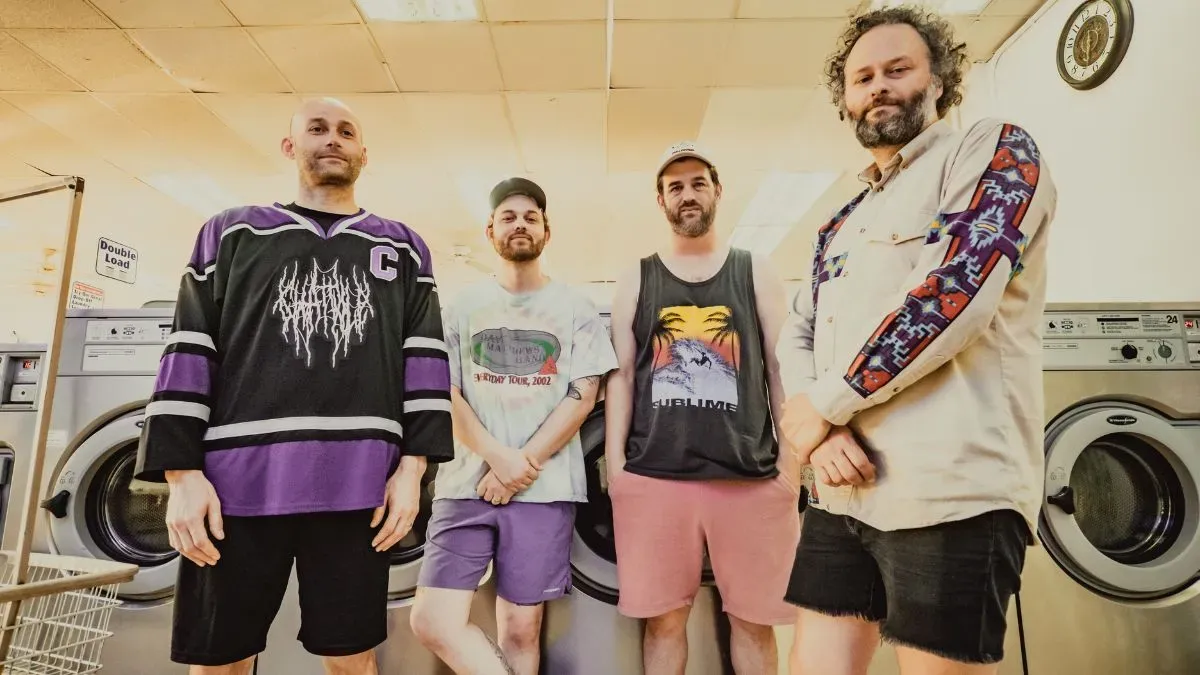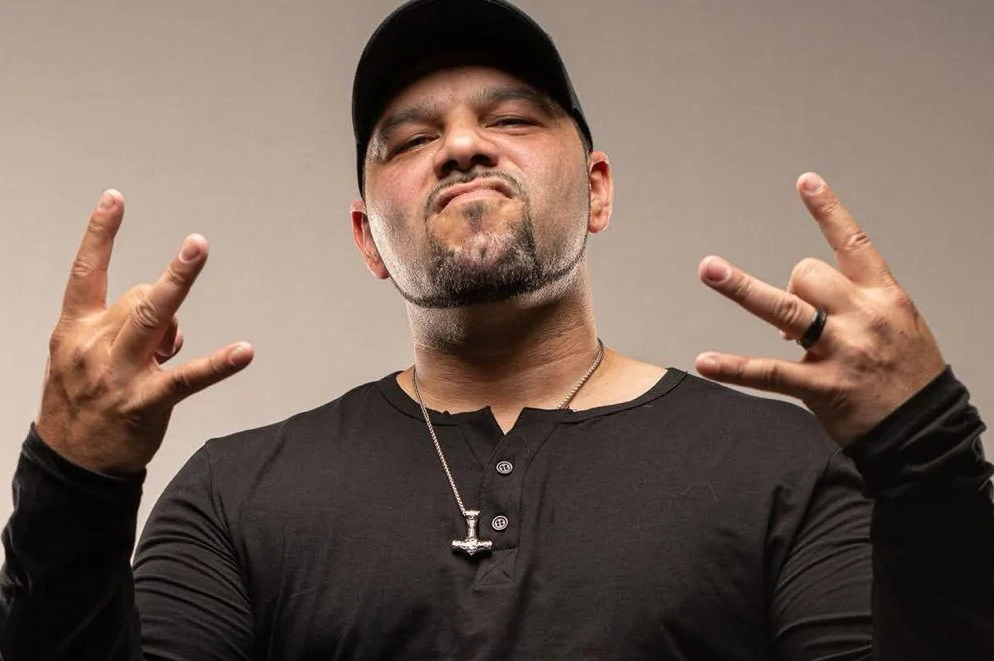
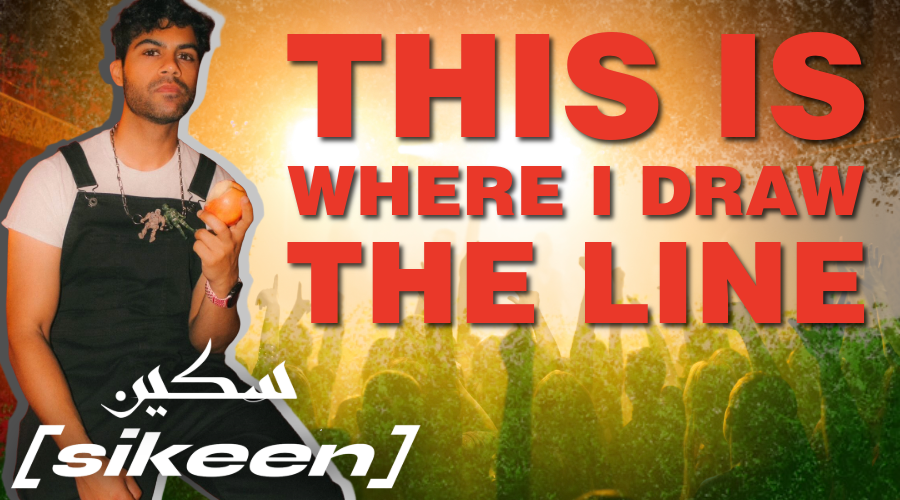
Adam Elara is the front man of the band Sikeen, out of the Los Angeles area. Sikeen labels itself as an Arab and Desi rock band. The band draws from a vast range of influences, from modern metal and metalcore to pop punk and the likes of Blink-182, as well as everything from Dakbe to Tool. Rock band is a fitting description for Sikeen in a broader sense, as the group pulls from so many different directions.
Elara sat down with the Nu Metal Agenda to discuss the background of Sikeen's music, how a host of music genres from around the world help create the band's unique sound and sonic choices, and how movements like the Palestinian liberation movement and others centered on antiwar and decolonization influence the band's lyricism, samples, features, and more.
You've got influences everywhere from modern metal and metalcore era stuff to pop punk and the likes of Blink-182. You've got a song that's straight up like a very Blink-182 vibe, which is really cool. So rock band is a good way to describe you guys in a big sense because you have a lot of different influences. I want to get into that. But first and foremost, how are you? How are you doing today?
Adam Elara: Pretty good. We're as good as you can be. Stuff's tough right now. But we don't need to get that heavy right off the jump. That's one of the hardest questions to answer. How are you doing? You're just like...
Yeah, you feel like you're at work and you're like, yeah, it's fine. All okay.
Adam Elara: You know that meme with the dog that's sitting smiling and the house is on fire? This is fine. That's me all the time.
I want to get into your music and some fun questions, but I do want to get into where I found your band, which was a random Instagram reel. I have to give a little bit of backstory and humiliation on my part. It was from you clipping the Her Last Sight band and going, this band is Israeli, we're not. People would send me these 30 second clips of them doing some hokey thing. Then I saw your clip and I was like, my god. As someone who has been very much in the know and trying to pay attention to Palestinian liberation, especially post-2023, I cannot believe this one got under me. I looked it up and it wasn't even just where they were from. It was really terrible opinions that had gotten them kicked out of a German music festival.
Adam Elara: Yeah, they pissed off five different communities in one day. It was crazy.
They just played with As I Lay Dying in Tel Aviv, which tracks.
Adam Elara: Is As I Lay Dying playing in Israel?
Yeah. The opener is Her Last Sight.
Adam Elara: Birds of a feather, right?
That phrase popped in my head right before you said it. What a cesspool of terrible. But the good part was that I found your band.
Adam Elara: Thanks, man.
One icebreaker: what have you been listening to lately?
Adam Elara: I've been listening to DJ Habibeat's new EP a lot. I'm probably going to end up doing a metal remix to one of his songs pretty soon. In the rock world, there's a band I just found on Instagram called Late Drive. They're cute. I like their music. With metal, nothing new, but I listen to ERRA a lot. That's usually my mix reference. There's a band, I don't know the name of the band, but the song is called "Limerence" and it's a good song.
That's Code: Words. I was actually supposed to have them on the other day. Scheduling mishap. Very good band.
Adam Elara: That's amazing. Also Tetrarch. Love them. They're so sick.
Yeah, great nu metal vibe band. Their guitarist Diamond is so insane.
Adam Elara: I'm vicariously so proud of her. All the stuff she's doing.
She's the first black female signature guitarist in Jackson guitarist history. That's an indictment on music at large, but very cool for her.
Adam Elara: Good for her.
ERRA is one I am with you on for the mixing side. They have so much going on and it's so crisp and clear without becoming too glossy. Jesse Cash has his fingerprint on it, but whatever they do with mixing is phenomenal.
Adam Elara: It's this 3D sound and separation. Everything is exactly where it needs to be. I'm always falling short of that reference, but it's good to have something to listen to when I'm working on stuff. I also don't have an eight string guitar.
Yeah, there's that. I'm someone that plays heavier music and I can't go to even seven. I use a baritone six string. My brain doesn't understand the difference in intervals. I use a baritone and put it down to drop F sharp.
Adam Elara: Personally, I will be moving to a seven string baritone next year.
Nice. You're the front man of the band, right?
Adam Elara: Yeah. In the studio I do most of the things. On stage I typically just sing. But frontman-wise, I do the mixing, the mastering, the arranging, songwriting, and most of the instrumentation writing.
So the forefront songwriter and headspace for the band.
Adam Elara: I do like collaboration. I am starting to work with our drummer more with the writing. Most of the material you guys have heard thus far was written in isolation without band members. Now that there are more people around, the music will evolve to reflect that.
I like to nerd out on recording. What's your go-to guitar?
Adam Elara: ESP LTD. This is my studio go-to because of the Evertune and the Fishman Fluence Moderns. This stuff does jet metalcore, pop punk, alternative. The key to everything is the volume knob. If you want to do something crunchier, you dial it back. It takes everything I throw at it. Even the auto music and the daisy stuff. The other weird thing, I like flat wound strings. It has a different tonality than round wound.
I love hearing somebody appreciate the volume knob. That's underappreciated for being able to do multiple styles with the same guitar.
Adam Elara: There is a lot of ground you can cover with a copy of Neural DSP Nolly and a Fishman Fluence Modern. You can do so much with just that.
You bring up all these different influences. The label of rock band really does fit the band well because it gives you this broad spectrum. First getting into music for you, what were some things that influenced you to get into music, whether you were just a listener or starting to play?
Adam Elara: What got me into actually playing music was Nirvana, Blink 182, Linkin Park. I was listening to it after the movement had already happened and people had moved on to the 'stomp clap hey' music.
The Mumford and Sons-type stuff.
Adam Elara: When I started actually playing in bands, that's what people wanted. I would show up with straightened hair, black eyeliner, ready to scream. No one thought it was cool. They said that stuff was so last decade. I didn't give a fuck. That's the kind of music I wanted to make. I wanted to start incorporating stuff from my own culture. We heard early DNA of this in bands like System of a Down, Tool, and Nile. There's a video game on PlayStation 2 called Prince of Persia. Those soundtracks by Stuart Chatwood blend rock metal alternative with vaguely orientalist music from a white perspective, but you can still appreciate it. When we started making this stuff, I thought it would be cool to actually do this without it feeling gimmicky.
You say that about the Prince of Persia soundtrack. Also Tool. System is more Armenian than just full on European. System actually had worldly influences.
Adam Elara: Serj actually lived in Lebanon as well. He's Armenian. I think he spoke Arabic as well. I've ingested a lot of interviews of him over the years. I did listen to his music a lot. He grew up performing Armenian music. I didn't grow up necessarily performing Arab music or Desi music, but I was definitely surrounded by it. Getting to do something in this space felt unique and exciting because a lot of my peers that are brown, whether they're Arab, Desi, Persian, tend to be hip hop rappers and DJs because that's cool mainstream culture. Rock is definitely not the cool guy music. I always tried to get into that stuff and no one understood it. Now out of nowhere, people are popping out being like, where has this been? I'm like, where have y'all been? We've been looking for the emo habibis this whole time. I'm always one of one everywhere.
That's a funny thing about music. Things come in cycles. Whether it's grown up Warped Tour people looking for different things, or the younger generation.
Your music, specifically. There's a song you have that sounds like it could have been on the self-titled Blink 182 album, like "Feeling This."
Adam Elara: "Watermelon Kickflip." I never really do this in writing a song, but that one had a mission. I needed to make the world's first pop punk dabke song. The drums follow the dabke rhythm, but the guitars do the Jerry Finn era Blink 182. That was very intentional. I love Blink 182. When I first started playing guitar, I learned all those songs because it's very accessible. With "Watermelon Kickflip," I wanted to do something in that vein. I spent grueling hours with my friend Hussain to come up with the lyrics. As much as this is a fun pop punk song, it is very serious what we're talking about in that track. We throw in the Blink 182 style humor, making fun of Israel in the song. I had to make sure people knew that was happening.
Had to do the Tom DeLonge dick joke in the middle of talking about an apartheid regime. Has this sort of social precedence or worldview been mixed in with your lyricism since you first started writing music? Or did it crop up more post-2023?
Adam Elara: The songs have been more intentional. The band is only a year old, started in the wake of everything following October 7th and the ongoing genocide of Palestine. That has definitely informed what we're doing. To speak to the preachy white boy stuff, we share common language because I grew up with emo scene music that I gravitated to after it fell out of fashion. If I could relate to an emo depressed kid in the Midwest or the suburbs, imagine you're that emo kid but you're also watching your parents' countries being blown apart since you were a child. That is why that music really resonated with me. I was sad for so many different reasons. There was this unarticulated thing I didn't know how to express. This was the best vehicle for me to get that point across. Add all the normal problems you would have in the suburbs. The pretty girl doesn't like you. You got kicked off the baseball team because your grades suck. All the bullshit that every kid like me would go through. But on top of that, there are racist kids making fun of you. You turn on the TV and watch the US occupy Afghanistan for the last 20 years. There are all these layers. The feedback we're getting from people is that finally there's representation. I don't even think of it that way. I just hope I am doing you justice.
What is your background? Where are your parents from?
Adam Elara: My family ancestry is Desi, Arab, Afghan. Yemen, India. I have family that lives in Pakistan. My grandmother's tribe is originally from Afghanistan. As a kid, I lived in Saudi Arabia, the United States, the UAE, Pakistan, Uzbekistan. I traveled all over. My dad had a job that made him move around a lot when he was working in Saudi. I was born here, but then we moved around. That has informed the way I look at the world. There are people I know who were born and raised in the United States, have never left, have never traveled. If they do, it's maybe to Canada or a Western European country. That's their lens. Mine has always been different. Seeing war crimes unfold and the fallout, it's been a lot of heartbreak seeing kids that look like me or people I'm related to or grew up with. Seeing futures absolutely gone, bloodlines destroyed. I'm out here making music. Every time I see a parent holding a seven year old boy after a bomb has dropped, that could have been the next great anything. The next Michael Jackson. A doctor. Everything. Now that I'm here and alive, I have to see this through. I got the opportunity.
What has been your take on the music scene at large post-October 7th? Specifically the rock scene in the United States. There's been a lot of disappointment. Some surprising good voices. Some horrific people. Your thoughts at large.
Adam Elara: We are getting breadcrumbs. Little shout outs. Little recognition. What I'm not seeing, and I wish we would see, is more of what happened in the 80s with Live Aid. It would be great to see something more upfront that generates more donations and charity and awareness from the biggest voices in rock. It's great that somebody shouts Free Palestine on stage. But what would be great is a high level of organization with people who have made careers off of resistance youth culture music. Right now there is a disconnect between the roots of that and where these people are at and their relationship to the working class and what our politics are. Blink has never been a political band. I like what Tom Morello has been doing. He was on campus in encampments performing. Hayley Williams said something about Free Palestine. Bring Me The Horizon did a whole song about Gaza called "n/A." I appreciate anybody who speaks out. I don't know what people expect us to do. The need is too high and not enough people are talking about it. That's why I started doing this. I felt like not enough people were doing it. It sparked me to do something and try to get attention to my friends in this scene.
That gets into your most recent song "Draw the Line," which was the first song I heard from you guys. I love the art, the dagger, which fits with the band name. Speak to what the song is about, the lyricism, the background, and the influence that brought the song to creation.
Adam Elara: This song was written in 2024. What was happening at that time was that Israel had not only bombed Gaza and started the increasing encroachment on West Bank territories of Palestine, but also bombed Lebanon, Syria, and Yemen. There is a double entendre to "Draw the Line." On one hand, I'm referring to the fact that all these borders were not made by us. This land was not all these separate countries at one point. It was Bilad al-Sham. The same thing with the rest of the Middle East. I don't like that term.
Yeah, I'm trying to work on not using that one anymore myself as well.
Adam Elara: West Asia, how about that? North Africa, West Asia, South Asia. All of these borders were not drawn by us and are not reflective of where our peoples are. The song is also asking the American public and everybody else, where do you draw the line? How much is enough? They said they wouldn't bomb hospitals, then they did, then they said they were sorry, then they kept going. You're like, how much will you allow them to get away with? The other question I'm asking is, who are you to tell me what is mine? I've had conversations here in Los Angeles where a white man is explaining to me the geopolitical natures of the countries that I'm from. You've never been there. People are telling me that hummus is actually Israeli. The word hummus literally means chickpea in Arabic. It does not have a meaning in Hebrew. The reason we call it hummus is because the name of the actual dip is hummus b'tahini. When you go to a supermarket and buy a can of chickpeas, it says in Arabic, hummus. Where does some Polish guy get off?
At the very least, they could be like me and be honest and pronounce it like a white Western European. You got to say hummus. Own that you didn't create this.
What you're talking about with "Draw the Line" is something I've tried to explain to people. White liberal people don't understand this dismissive nature that literal borders were drawn with. The old joke is that Winston Churchill sneezed while drawing the line for several borders. That's how dismissive they were.
Adam Elara: It happened in that region a few times. You bring up India because that happened in 1947 with partition. East Pakistan, India, and then Pakistan. 1948, that partition plan is West Bank, Israel, Gaza. Before that, you have the Durand Line between Afghanistan and Pakistan. Pakistan didn't even exist yet because Pakistan came into being in 1947. Then you have Sykes-Picot, where Bilad al-Sham got diced up and spread into all these different things. It was just French and British acquiescing to whatever they wanted to have influence over. Musically, I wanted to bring in the aggressiveness of what I grew to love about things like Deftones, Linkin Park, Korn, even Limp Bizkit. The nu metal energy. We have turntables snuck into the music, a lot of sampling. I tried to make it work as a song that kicks ass. I snuck in an actual chant that we do at protests. In the chorus, I sing in English, "This is where I draw the line," and then back and forth in Arabic. It translates colloquially to "From the River to the Sea." That is the foundation of the song. We got a hookah bar keyboard solo over a metal breakdown at the end of the song. That was just my music nerd self.
You do the mixing yourself?
Adam Elara: On every song from "Strangeland" to today, everything has been mixed and mastered by me except for one song called "Habibay." That was a funk rock collaboration track I did with Mama Yaya, who is a Palestinian and Jewish singer. We had it partially mixed in the West Bank. We had instruments and samples that were recorded there. Abed, who is from Levantine Music, is Palestinian and did a lot of mixing on it. I'm not Palestinian, so I wanted that to be a core feature of the song. Make a song about Palestine and have some Palestinians involved.
You were able to get samples from the West Bank?
Adam Elara: Some instruments were recorded there. Some loops. Abed has so many connections out there and was able to source so much stuff for us to make that song happen. Mama Yaya found me off of TikTok and we became best friends. She's such a good singer. That song would have never happened had it not been for her. She is very much a soulful R&B singer. At the time, we had been doing pop punk fusion metal stuff. When our styles combined, it became this funky rock thing. It was cool.
That's another one of my favorites. Her voice adds so much to that track.
Adam Elara: Definitely made me work a lot harder. I was like, damn, she's so good. I can't suck on this song.
Walk me through the instrument side. You use Neural DSP and the Nolly plugin. What's your go-to for programming drums? Do you use GetGood Drums or One Kit Wonder?
Adam Elara: I do everything inside of Ableton Live. There's a couple of tasks for editing that are done in Cubase, but most of our stuff is done in Ableton by me. I used to have a ton of guitars. I've really shrunk my collection now. I have a Fender P-Bass. I have an acoustic guitar, a Mitchell. I used to have a Taylor, but times got tough. I had to sell my Taylor for rent. It fucking hurt. For recording I use the ESP LTD with the Fishman stuff. For live I have this modified Fender Squier that has the color palette of the Palestinian and Arab flags. I chose that color palette because it's not only for Palestine but also for the countries I'm from as well. That one also has the Fishman Fluence Modern in the bridge. I did the Tom DeLonge thing where it's one knob, one pickup.
For drums, it's a hybrid approach. We haven't had the money to go into a proper studio to record live drums, so I use GetGood Drums. But then I'll pick different drum samples from elsewhere and layer them. Joey Sturgis has those one shots. There's a couple of libraries from him that I use. There's also EZ Drummer. For a long time I had an e-kit that I would hook up to MIDI to actually capture performances, then edit them on the computer. I also have a keyboard that I program stuff in with.
For guitars, a lot of it is Neural DSP, but there's another program called THU Overloud. I use that to layer with guitar tones. It gives you everything, all the pedals and amps. I typically shut off the cabs on those and use an IR loader from Fractal called CabLab. I bring in IRs from various things. With Neural, I don't bypass the cab. I just use what they have because it's a rabbit hole.
There's a VST called Toxin Solo where you can get all these Arab instruments. The oud, the mijwiz, the ney. There's some other Native Instrument libraries like Oriental Strings, Baklava, Orient Express that I use to make the soundscapes and samples for our music. It's two parts. The rock element and the Arab and Desi stuff. It's cool being on rabbit holes on YouTube for metalcore, djent, and pop punk, and then switch over to how to recreate an Omar Souleiman song or a Levantine thing.
What's next for the band? Where can people find you?
Adam Elara: We have a new song coming soon. I'm in the final stages of the mix right now. It was originally written for a Palestinian wrestler as his entrance song, and he wanted us to release it as a single. There's this thing going viral on TikTok called a zegel, which is Arabic rap battle poetry, the oldest form of that. We actually have it in the song where me and another singer are doing that against the imaginary opponent that this wrestler would face. It's a heavy song. Our next show is in San Francisco, August 13th at the El Rio. Other than that, we're always going to be putting out covers and little fun experimental stuff. Singles are always dropping because that's the way you have to be a band now. You have to be a content machine. Constantly.
What would you want first time listeners to check out for the first time?
Adam Elara: Make sure to listen to "Draw the Line" by my band, Sikeen. And when you're done listening to that, donate some money to some kids in Gaza.
Adam Elara of Sikeen, thank you so much for your time. It's been great to talk to you.
Adam Elara: You too, man. Thanks so much for having me on.
Sikeen's latest song, "Draw The Line," is out now on all platforms. You can find it through their socials and links, as well as via the Spotify embed below.
To listen to the unabridged conversation, check out the video and audio formats of The Power/Less Podcast.