
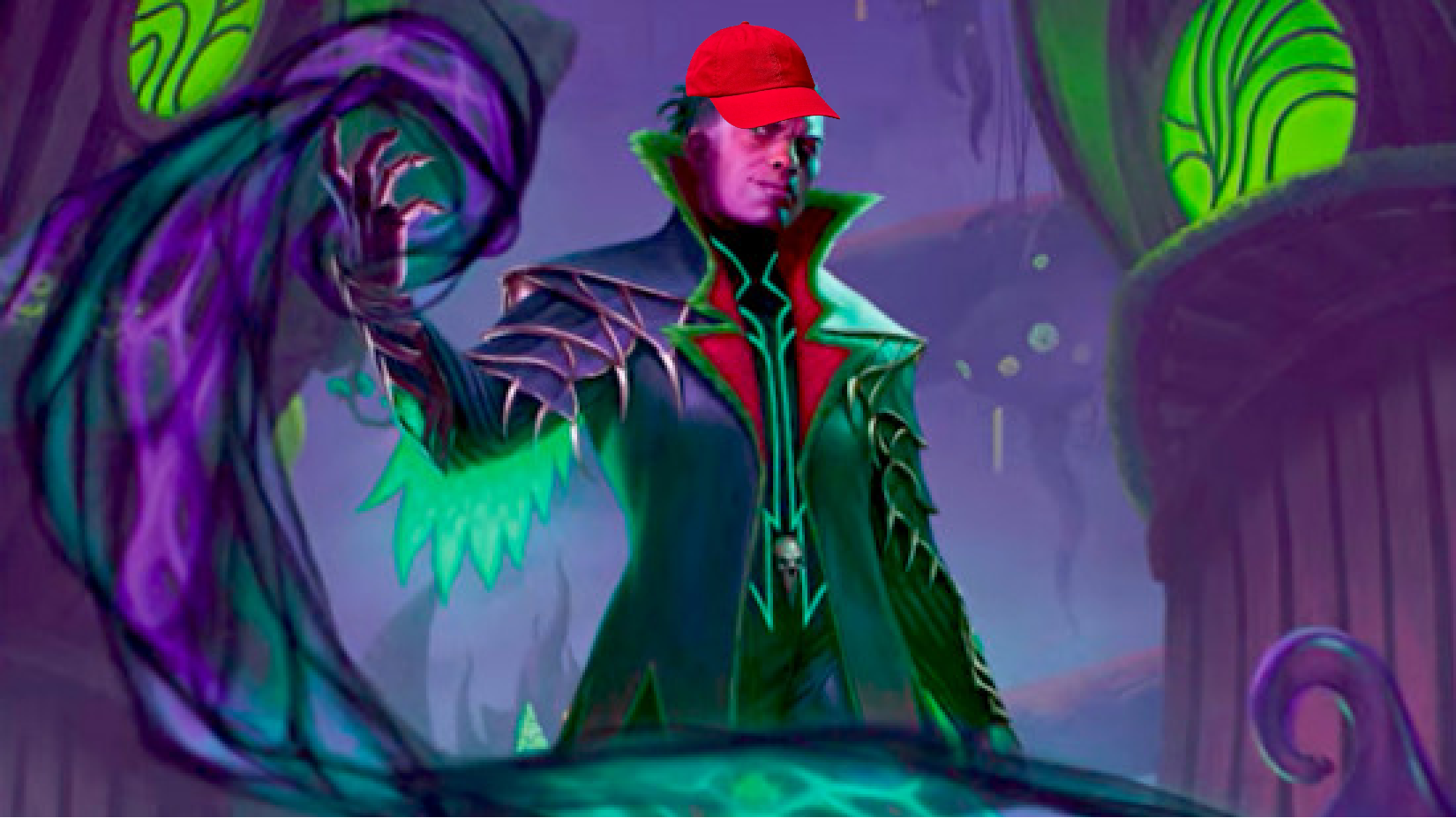
The newest set in Magic: The Gathering returns to a wizarding world that is far less problematic than the one we all know and have to endure a thousand questions about which house we fall into. As we've had two runs of assigning mana colors to nu metal legends, we decided this time to take the five colleges of Strixhaven and figure out where some of our favorites would fall. Part lore, part shenanigans, all Magic, this is our way to get ready for the release of this set, which drops on Friday, April 24th.
This is by no means an exhaustive list, but as the Magic universe is set to go back to school, we figured it's time to get the Mini Maggit back out, push out the square, and sort out some of the best and brightest.
Prismari (Red/Blue): Mudvayne
There is something about Blue-Red that has just screamed Mudvayne to me since we started doing this series, and the Blue-Red Strixhaven school isn’t doing a dang thing to change my mind. Prismari’s approach to magic is a worship of art and performance, blending Blue’s intellectual approach to aesthetics with Red’s impulsive, pyrotechnic and occasionally aggressive commitment to spectacle. Since that initial music video for “Dig” dropped, Mudvayne’s been a band that demands to be seen as much as heard, with every member committing to a visually striking and distinct look. And they’ve always been stylistically aggressive and confrontational–they’re a nu metal band, after all–but there’s a wealth of creativity and deeper thought bubbling beneath the surface. I’ve personally spilled plenty of pixelated ink on Ryan Martinie’s madcap jazz fusion-informed basslines, the on-a-dime time signature shifts that pop up all over the band’s early material, and frontman Chad Grey’s persistent attempts to understand the least understandable aspects of our existence–human mortality through his grandmother’s eyes, the inner workings of Ed Gein’s brain, his own frustration with the ways we continually make life hell for each other. Not every Prismari band would be making nu metal, as much as I’d love to be a fly on the wall for that scene, but Mudvayne’s approach to the genre would fit in well with the theater kids of Strixhaven.
SEE ALSO: Pleymo, Themata by Karnivool
Silverquill (White/Black): Slipknot
Silverquill is the Strixhaven school dedicated to the magic of words–living by the mantra “Sharp Style, Sharper Wit,” it’s the place to go to learn how to uplift co-combatants with a poem or incantation, or weaponize language to harm an enemy. And, listen, Slipknot’s Corey Taylor is not the only or even the most avid nu-metal student of ‘90s battle rap, but his work with that band embodies Silverquill’s ethos of linguistic assault much harder than most of his contemporaries. The most obvious poster child for this is the half-screamed, half-rapped shit-talking in “Spit it Out,” but Slipknot lives and dies by what Taylor is saying over the band’s then-singular aggression as much as how he delivers it.
Some of the lyrics on their sophomore album Iowa are almost comically aggressive and gruesome in a way that let them ride the controversy to the top of the charts. And then there are the koan-like lines that just plain don’t make sense, but lodge in your brain with repetition until, here you are, decades after the fact, grinning ear to ear listening to this motherfucker from Iowa bark “You can’t see California without Marlon Brando’s eyes” over and over again. And what is that, really, if not an incantation that found its target?
SEE ALSO: Linkin Park, UnityTX
Witherbloom (Black/Green): Korn
In a previous nu metal artists as Magic color combos piece, I assigned Jonathan Davis to Golgari, with the justification that he was once a mortician before getting into the band. That's absolutely part of the reason for putting him into Witherbloom here, but the college motto of "Get Your Hands Dirty" also comes to mind. These Bakersfield faithful weren't afraid to pound pavement and put up with a lot of shit in those early years, and some of their members, namely Fieldy and Head, have cheated death in their own rights.
Further, their guitar tone on the early records was described by Chris Garza as being just muddy enough to not be shitty, and if that doesn't encapsulate getting one's hands dirty and making something out of what's given to them, what does? And just to drive it home, the cover of their 2016 album, the underrated Serenity of Suffering, just gives big Witherbloom energy. It's dingy and uneasy to the point of awe-inspiring.
Yes, Slipknot calling their fans "maggots" almost put them here, but when it comes to death and rebirth, it has to go to Korn.
SEE ALSO: Primus, Sleep Token
Lorehold (Red/White): System of a Down
Lorehold is the Strixhaven school dedicated to historical study and exploration, an exciting marriage between the thoughtful mages poring over ancient texts for some deeper truth and the more impulsive adventurers and tomb raiders who prefer a more hands-on approach. If there’s anyone from the nu-metal canon who comes close to embodying this duality, it’s System of a Down, who embraced aggressive metal aesthetics and theatrical absurdity to get people in the door, but spent much of their musical career crafting a counternarrative to the way the powers-that-be in Bush-era America would prefer to think of themselves. Tracks like “Prison Song” shove the failures and brutality of the War on Drugs and mass incarceration into the popular historical record, and no other band could drop a rant like “All research on successful drug policy shows that treatment should be increased / And law enforcement decreased while abolishing mandatory minimum sentences” into a breakdown, let alone get away with it and wind up with one of their most beloved tracks out of the deal. “Why do they always send the poor” from 2005’s “B.Y.O.B.” gets quoted to this day, as the Sauron’s Eye of the American military-industrial complex swings back to the Middle East once again.
What makes System of a Down a slam dunk for Lorehold, though, is their introspective impulses. They’ll take shots at ‘90s drug policy and militarized policing, but don’t hesitate to take a step back and reach for something deeper–songs like “Aerials” and “Question!” don’t offer easy answers, just vague meditations on who we are and what it all means. If anybody from Lorehold was suddenly afflicted with a pressing need to tune down to drop C, it’d probably come out sounding a lot like System.
SEE ALSO: Poppy, Rage Against the Machine, Stray From the Path
Quandrix (Blue/Green): The Callous Daoboys
Categorically speaking, the Atlanta sextet are "mathcore," and Quandrix concerns themselves with numbers. While their magic is formulaic, TCD's music is anything but. Their blend of myriad genres makes for one hell of a stew, and it's all done so carefully. Let these folks cook and you will be rewarded. The same song by these madmen can easily jump between pop-punk, metalcore, break beats, jazz, you name it. Higher-level math is more about showing how you got to the answer, rather than the answer itself, and as such, the Daoboys exhibit the traits most sought after by Quandrix.
Quandrix's campus has an evolving 3D grid, such that its professors recommend not spending too much time there unless they want to run the risk of suffering a singularity in real time. And if "Singularity Suffering" doesn't sound like a Callous Daoboys track, I don't know what does.
SEE ALSO: Deftones, Tool